
The University Women’s Club has been a home for remarkable women for 140 years. Founded on 17 July 1886, the Club began with a question posed by Gertrude Jackson in the spring of 1883: what if there were a club, a proper club, for women of the university? The idea was simple but radical. They would proceed once 200 interested women had been found. They were found. And on 17 July 1886, the University Club for Ladies opened its doors.
One hundred and forty years on, the University Women’s Club is still here, still in Mayfair, still wholly owned and run by its members, and still, we like to think, doing exactly what Gertrude Jackson had in mind.
The women who founded this Club were pioneers in every sense. They were among the first generation of women to attend university in Britain. In their ranks were artists, scientists, doctors, writers, lawyers and campaigners,women who were quietly, determinedly reshaping what was possible. Barbara Bodichon, one of the most significant figures associated with the Club’s early years, was not only a celebrated artist but a co-founder of Girton College, Cambridge, and a tireless advocate for women’s education and legal rights.
One Club. Fourteen decades. Countless remarkable women.
What strikes us, 140 years on, is how much that spirit endures. Today’s membership includes women working at the forefront of medicine, women shaping health policy, academics, writers, artists, barristers, and advocates. The names are different. The work continues.
This year, we are marking our 140th birthday with a celebration on the very date we were founded — Friday 17 July 2026. We’ll be raising a glass to the women who built this Club, and to all those who carry that legacy forward. We are marking this milestone by celebrating some of the remarkable women who have shaped this Club — and the legacy they left for the women who followed.
One club. Fourteen decades. Countless remarkable women. The University Women’s Club marks 140 years in 2026 — and the women celebrated on this page are just some of those who made it what it is.
If you would like to find out more about this community of remarkable women explore Why Join the UWC or read about Becoming a Member, or email us directly at membership@uwc-london.com.
Remarkable Women: 140 Years of the University Women’s Club
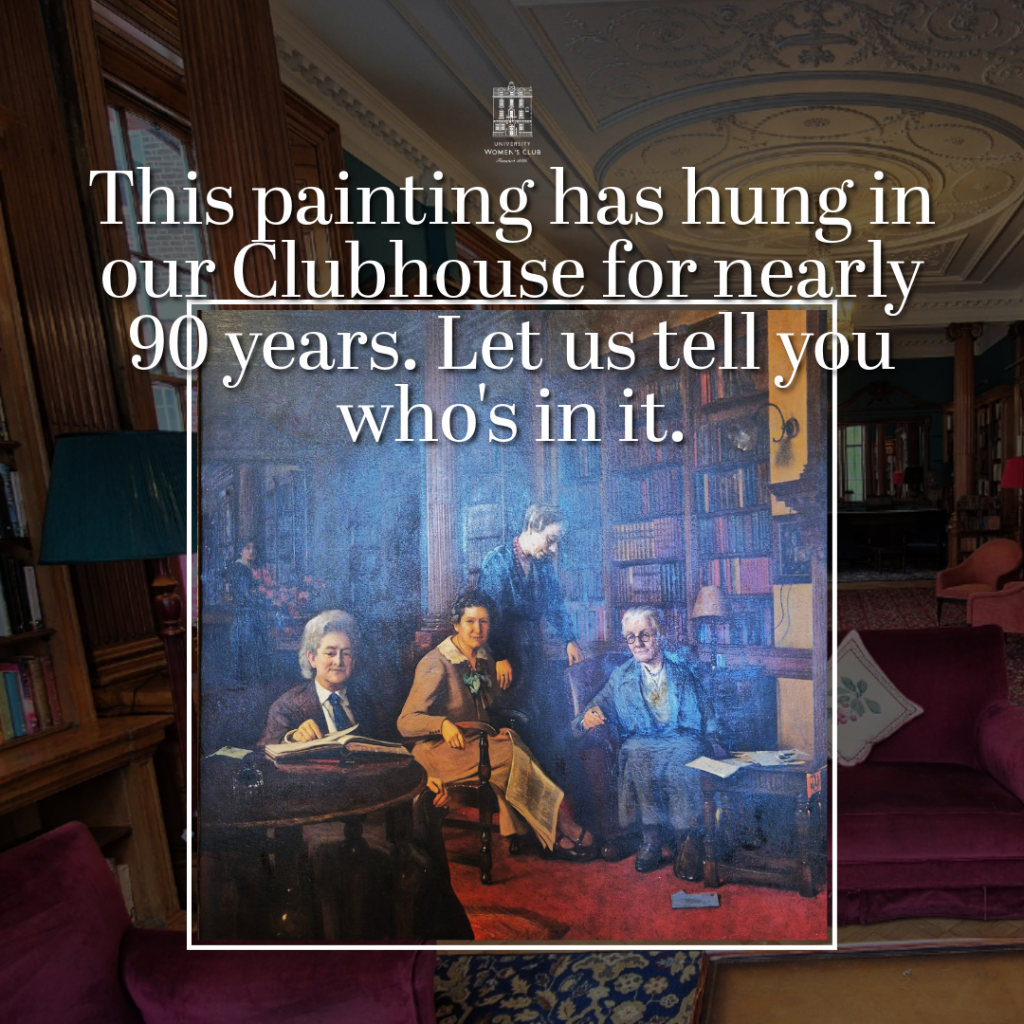
The Spencelayh Painting: Alice Carthew, Hannah Cohen, Winifred Dakyns & Blanche Athena Clough
The women who bought the building — painted sitting in it
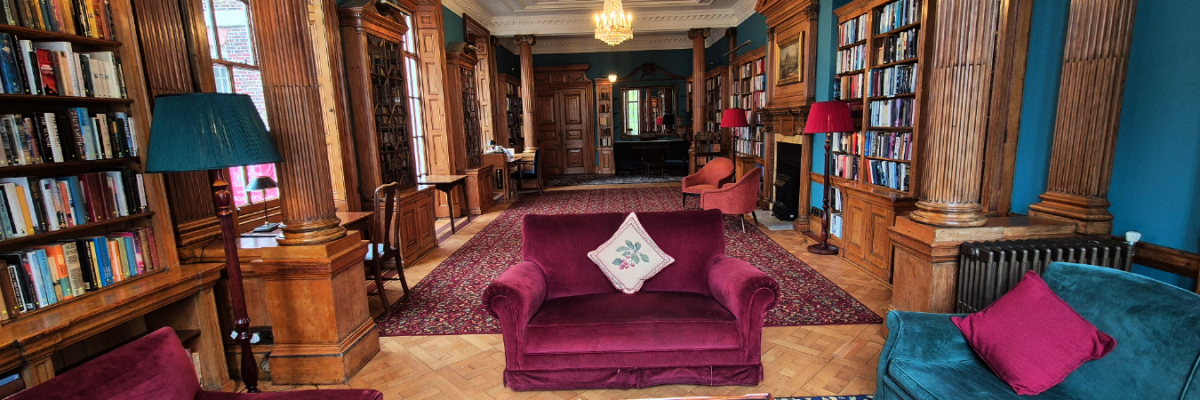
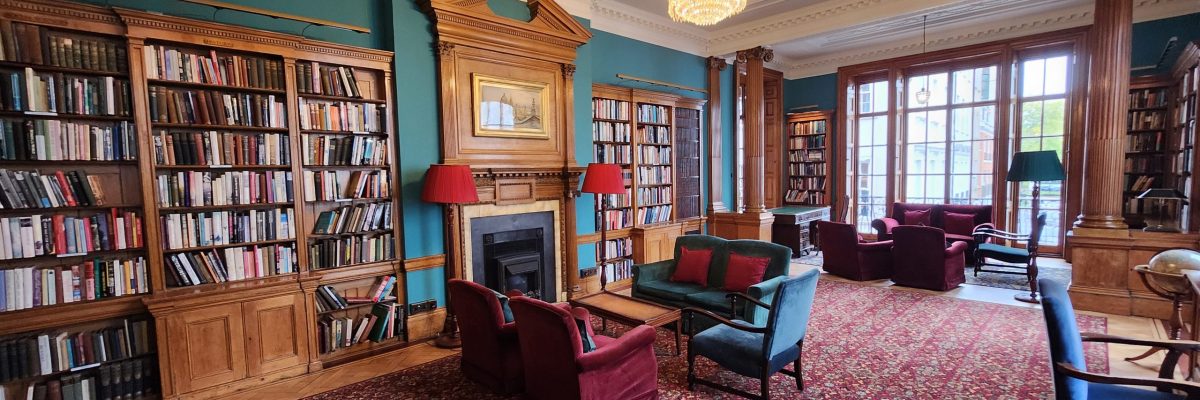
In 1936, member Hannah Floretta Cohen commissioned a portrait to mark the Club’s 50th anniversary. Three of the four women depicted were among the Trustees who purchased 2 Audley Square in 1921 — the building the Club still calls home. The painter captured the Library with such fidelity that members say it remains recognisable today.
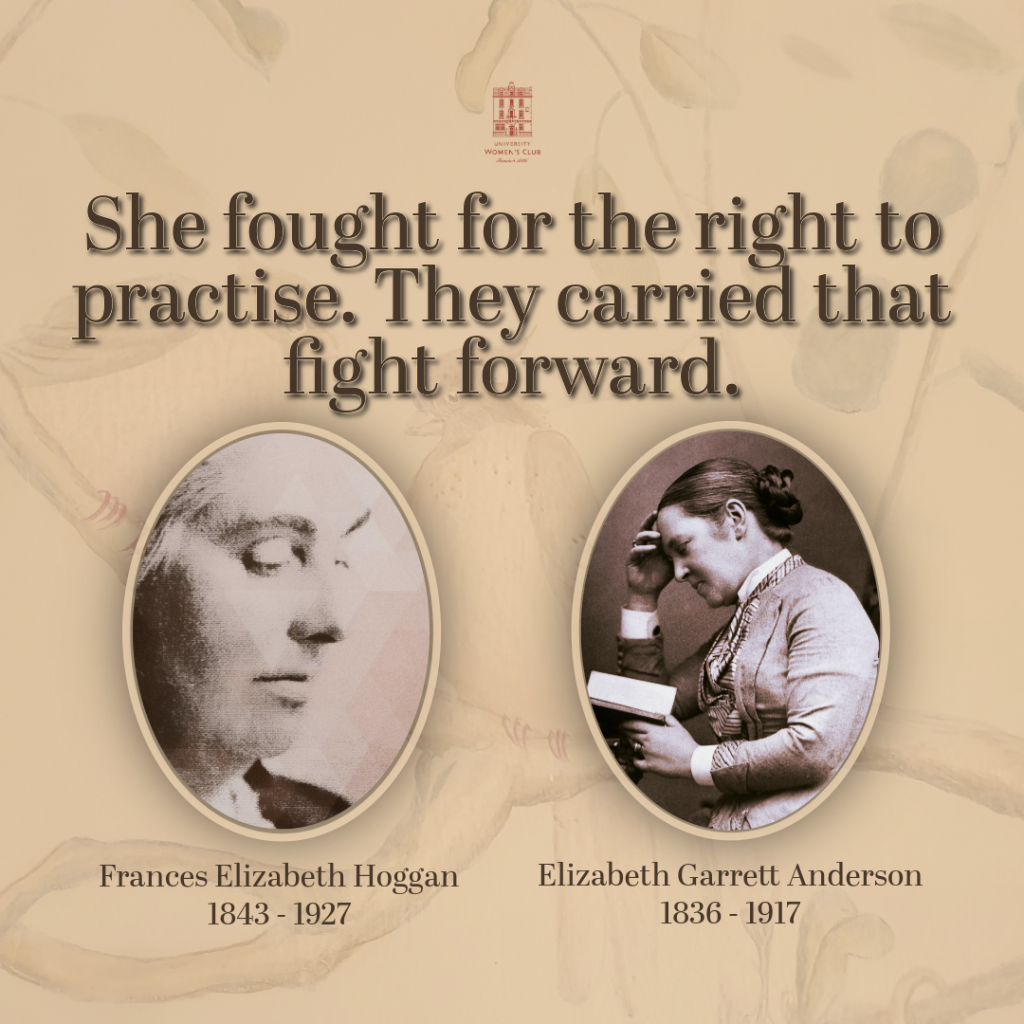
Elizabeth Garrett Anderson & Frances Elizabeth Hoggan
The first English and first British women to qualify as doctors — and founding members of the UWC
Elizabeth Garrett Anderson found a loophole into medicine in 1865, founded the New Hospital for Women, and became Britain’s first female mayor. Frances Hoggan completed a six-year medical degree in three years and graduated three months before Garrett Anderson — making her the first British woman to receive a European medical doctorate. What is less well known is that the two women went on to work alongside each other at the New Hospital for Women in London.
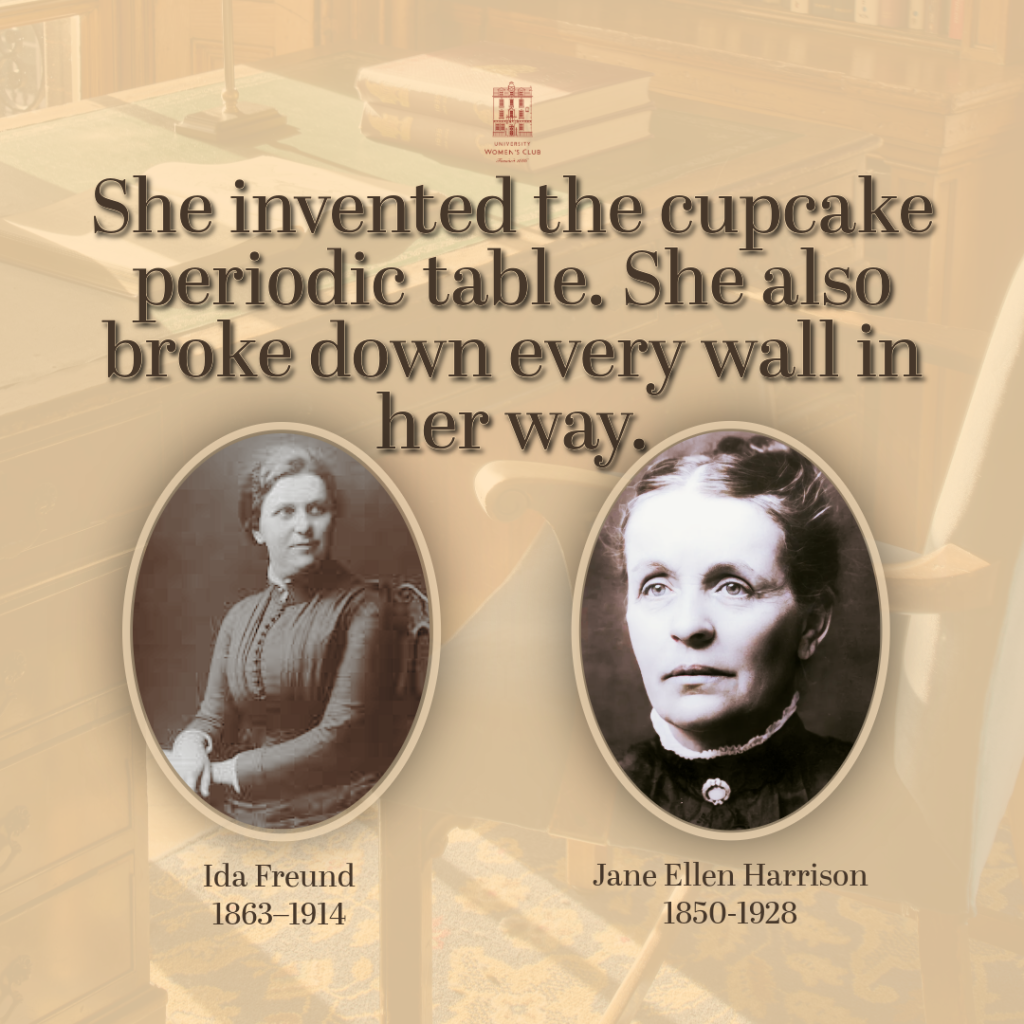
Ida Freund & Jane Ellen Harrison
The first woman university chemistry lecturer in the UK, and the first woman to become a fully professional academic — both connected to the UWC
Ida Freund achieved first class honours in the Cambridge Natural Sciences Tripos, was denied the degree, and went on to become the first woman to hold a university chemistry lectureship in Britain. Jane Ellen Harrison was twice rejected for a professorship on the grounds that teaching by a woman was “undesirable” — and is still described by Mary Beard as the first woman in England to become an academic in the fully professional sense. The University Women’s Club has confirmed that Harrison used the Club as her main address for several years in the 1920s.
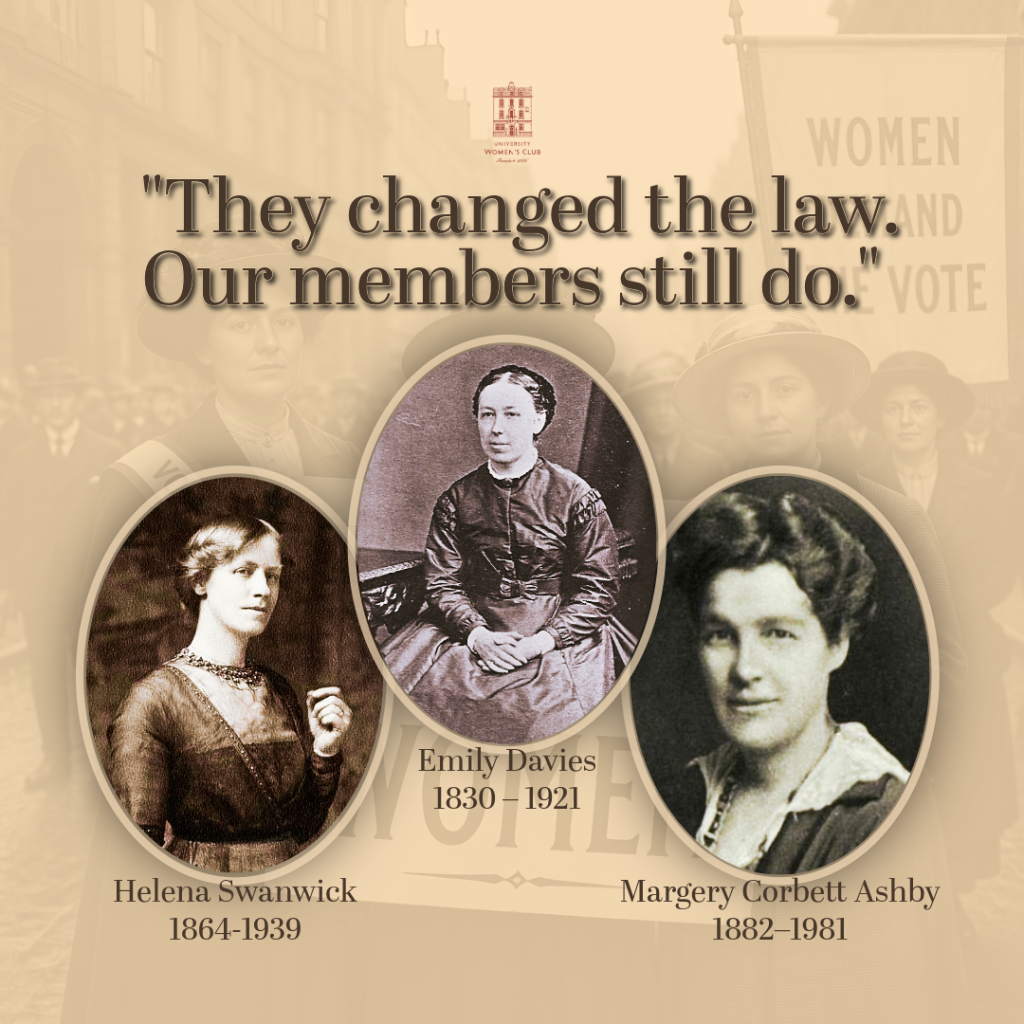
Emily Davies, Helena Swanwick & Margery Corbett Ashby
Education reformer, peace campaigner, and international suffrage president — three women whose public careers span more than a century
Emily Davies co-founded Girton College in 1869 and fought her entire life for women’s right to the same education as men — on equal terms, not lesser ones. Helena Swanwick edited the NUWSS’s journal, chaired the Women’s International League for Peace, and represented Britain at the League of Nations. Margery Corbett Ashby was President of the International Woman Suffrage Alliance for twenty-three years, stood for Parliament seven times, and was still attending Women’s Day of Action events at 98.
Alice Everett (1865–1949)
Astronomer. Physicist. Television pioneer. UWC member since 1890.
In 1890, Alice Everett became the first woman to work at the Royal Observatory Greenwich, hired as cheap labour to photograph stars, despite passing the Cambridge Mathematical Tripos. She then retrained entirely in optics, secured a position at the National Physical Laboratory in 1917, and in retirement helped develop television alongside John Logie Baird, co-applying for a joint patent in television optics in 1933. In 2023, an asteroid was named in her honour.
Ethel Sargant & Margaret Crosfield
The first woman on the Linnean Society council, and the first female Fellow of the Geological Society — both UWC Members
Ethel Sargant conducted groundbreaking botanical research from a private laboratory at home, because university laboratories were closed to her — and became the first woman to preside over a section of the British Association. Margaret Crosfield published significant geological research on Welsh stratigraphy, was an active suffragist, and on 21 May 1919 became the first female Fellow of the Geological Society of London — first, simply because her surname came first in the alphabet.

Historical portrait images are believed to be in the public domain. If you are the rights holder of any image featured on this page, please contact us at marketing@uwc-london.com