
Ida Freund & Jane Ellen Harrison — Scholars Who Broke Every Barrier
Ida Freund and Jane Ellen Harrison were two of the most remarkable academic pioneers of their era, and both were connected to the University Women’s Club. Ida Freund became the first woman to hold a university chemistry lectureship in the UK. Jane Ellen Harrison, described by Mary Beard as the first woman in England to become a fully professional academic, used the University Women’s Club as her main address for several years in the 1920s. Both passed the most demanding examinations Cambridge could offer. Neither was awarded a degree.
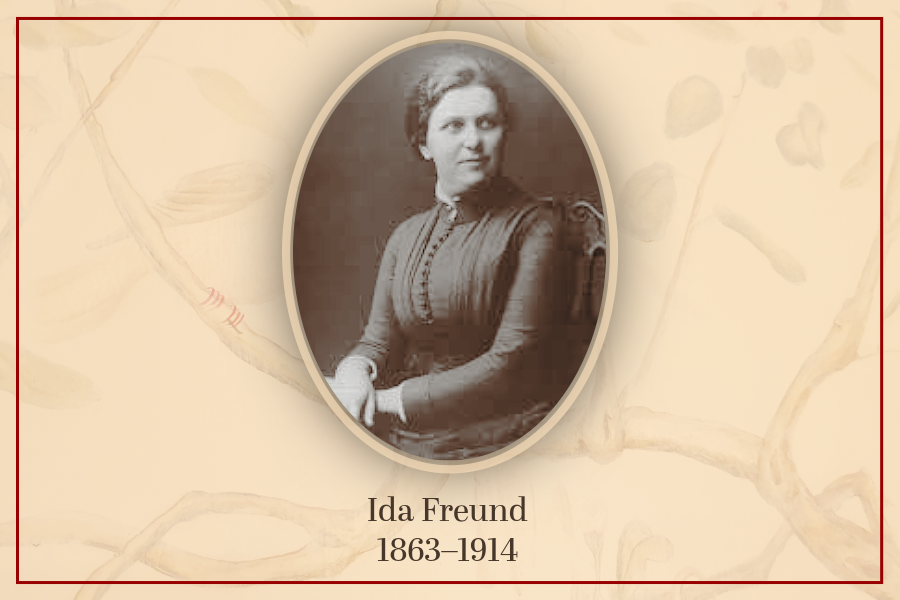
Ida Freund (1863–1914) arrived in England from Austria at the age of nineteen with very little English and a determination to study science. She achieved first class honours in the Natural Sciences Tripos at Girton College, Cambridge, and was not awarded the degree. She joined Newnham College as a chemistry demonstrator in 1887, and in 1890 became the first woman to hold a university chemistry lectureship in the United Kingdom, teaching at a time when female students were excluded from the main university laboratories.
She was instantly recognisable at Newnham: a wooden leg from a cycling accident, a strong Austrian accent, flamboyant clothes, and an approach to teaching that was, by the standards of the time, radical. She believed science should be understood, not merely memorised — and she is remembered for baking the first periodic table of cupcakes, each topped with an element’s name, symbol and atomic weight, a tradition that lives on in science communication to this day. She fiercely opposed the substitution of domestic science for proper scientific education in girls’ schools, authored two major chemistry textbooks, and invented a gas measuring tube that bears her name. She died in Cambridge in 1914, aged fifty-one.
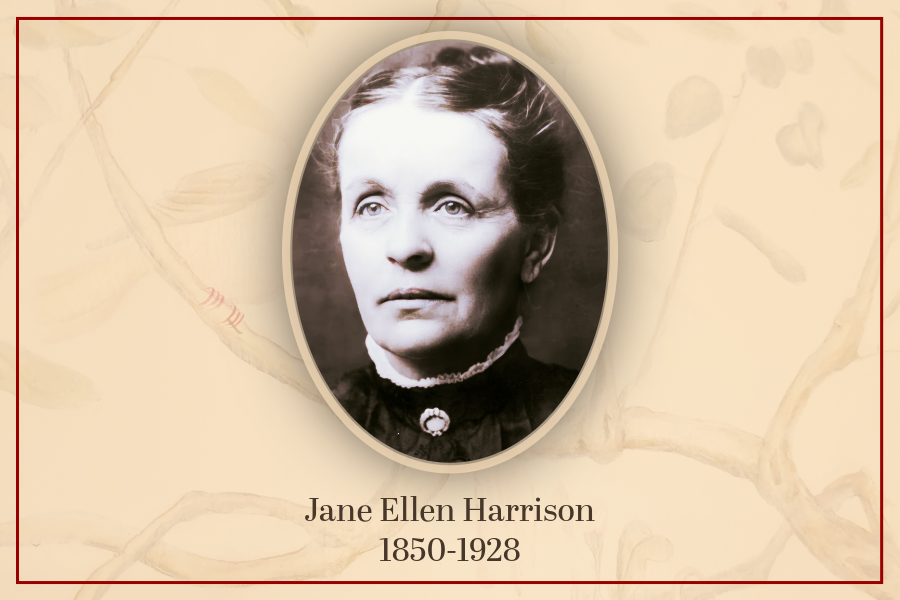
Jane Ellen Harrison (1850–1928) was ranked second in the Classical Tripos of 1879 at Newnham College, Cambridge. She was not awarded the degree. In 1888 she applied for the Chair of Classical Archaeology at University College London and was rejected on the grounds that it was “undesirable that any teaching in University College should be conducted by a woman.” She applied again in 1896. She was rejected again.
She was forty-eight before she was offered a fellowship at Newnham — and it was there that her scholarship reached its peak. Her works Prolegomena to the Study of Greek Religion (1903) and Themis (1912) remain in print today. Mary Beard has described her as “the first woman in England to become an academic, in the fully professional sense.” She spoke French, German, Latin, Ancient Greek, Hebrew and Russian, and in retirement devoted herself to Russian literature.
The University Women’s Club has confirmed that Jane Ellen Harrison used the Club as her main address for several years in the 1920s — a connection that places one of the most significant female academics of the twentieth century in direct relationship with this building and this community.
The work of Ida Freund and Jane Ellen Harrison continues to resonate — in every woman who teaches science, publishes research, or claims her place in academic life. Today, the UWC’s membership continues that tradition, counting academics, researchers, and scientists among those who call the Club home.
This piece is part of the University Women’s Club’s 140th anniversary series. Members can read the full archival account of these women in the Members’ Portal.